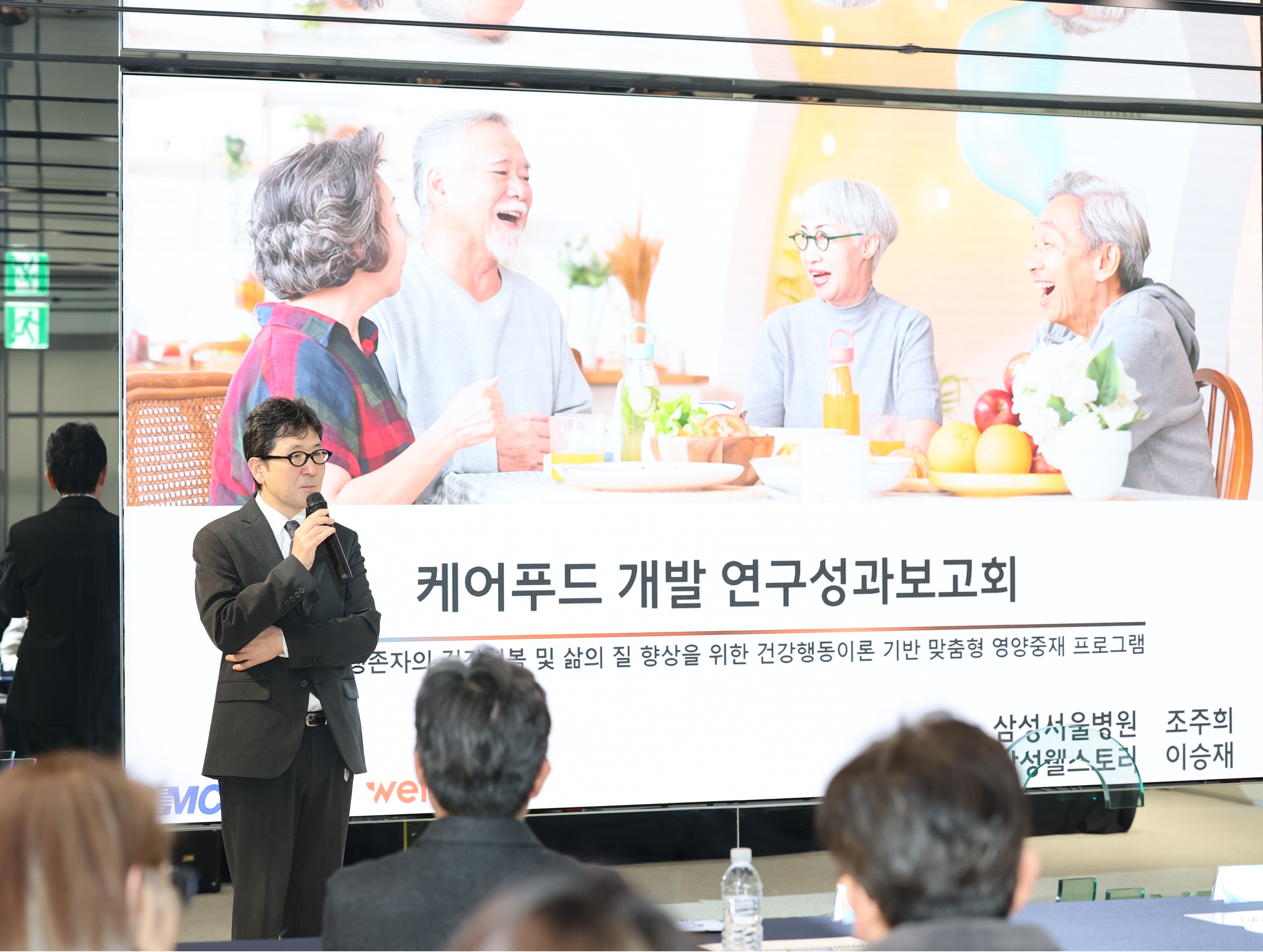
Samsung Medical Center and Samsung Welstory announced on March 23rd the joint development of "high-density care food" designed to address the critical nutritional challenges faced by cancer patients.
The two organizations held a research outcomes presentation on March 19th to review the findings of their care food development initiative and discuss a shared vision for the future of cancer patient care.
High-density care food refers to specially formulated meals that provide sufficient calories and protein even in small portions.
This product is the result of a research initiative titled "Development of a Health Behavior Theory-Based Personalized Nutritional Intervention Program for Health Recovery and Quality of Life Improvement in Esophageal Cancer Survivors," a collaborative project between Samsung Medical Center and Samsung Welstory that has been underway since 2023.
The collaboration brought together Samsung Welstory's expertise in care food research and development with Samsung Medical Center's clinical specialization.
Nutritional status is widely recognized as a critical factor in the success of cancer treatment. According to international research, an estimated 10 to 20 percent of cancer patients pass away not from the cancer itself, but from malnutrition.
This study focused on developing food products that closely replicate the taste and nutritional profile of a regular diet while specifically addressing the postoperative dysphagia and digestive difficulties commonly experienced by esophageal cancer patients.
Clinical validation studies conducted at Samsung Medical Center demonstrated both the real-world feasibility of the care food and its measurable positive impact on patients.
In terms of overall health outcomes, the proportion of patients who adhered to the standard nutritional guidelines during the stable phase following surgery and chemotherapy increased from 22.2% to 55.6%— a rise of 33.4 percentage points — when care food was incorporated into their dietary plan. Overall health status also improved by an average of 8.3 points.
Following the success of the care food program for esophageal cancer patients, it is anticipated that this approach can be extended to address dietary challenges in patients with other cancer types.
Esophageal cancer patients are known to face significant difficulties with eating after surgery and are at high risk of developing nutritional imbalances.
Additionally, care food is expected to benefit elderly individuals who experience difficulty chewing and swallowing.
Doctor Hee Cheol Kim, General Director of Samsung Comprehensive Cancer Center and Professor of the Division of Colon and Rectal Surgery, stated, "This is a profoundly meaningful endeavor, bringing together frontline medical experience and food industry expertise to create a new model that makes a tangible difference in patients' daily lives. We hope this achievement will extend beyond cancer patients to inspire innovative services benefiting the broader elderly population."
Meanwhile, Samsung Comprehensive Cancer Center established the "Cancer Patient Quality of Life Research Institute" in partnership with Samsung Fire & Marine Insurance in 2024, with a focus on developing research programs and support initiatives aimed at improving quality of life across the full cancer care continuum.
Driven by these efforts, Samsung Comprehensive Cancer Center was ranked 3rd in the world for two consecutive years in the global cancer hospital rankings published by Newsweek in 2025.
Given that the top two institutions on the list are dedicated cancer specialty centers in the United States, Samsung Medical Center effectively ranks first in the world among comprehensive medical centers.