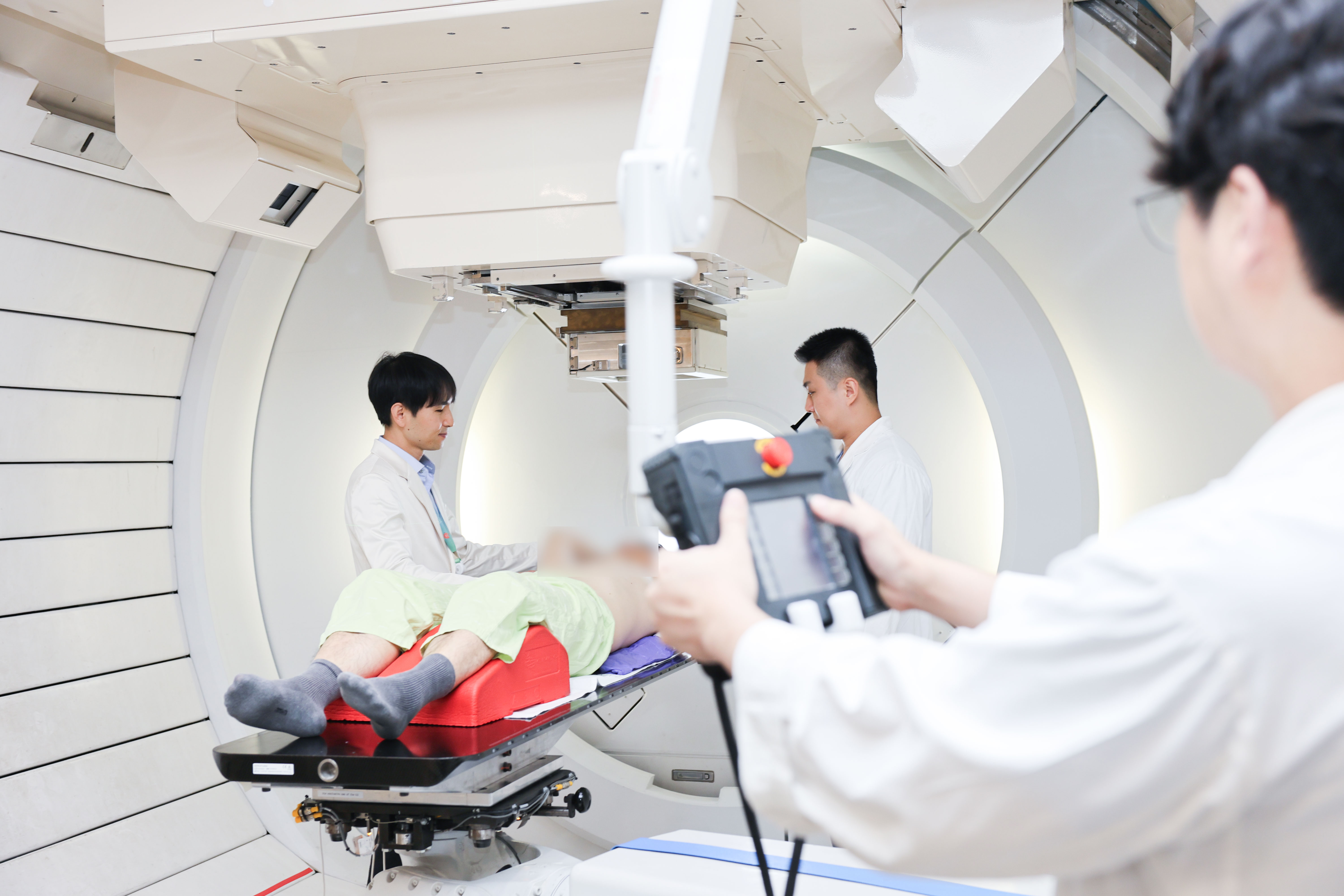
Samsung Medical Center has demonstrated the effectiveness of proton therapy in patients with liver cancer who were not eligible for standard treatment options, setting what is being described as a new international milestone in liver cancer care.
A research team led by Professors Hee Chul Park and Jeong Il Yu, along with resident physician Jeong Ha Lee from the Department of Radiation Oncology at Samsung Medical Center, analyzed 2,000 cases of liver cancer treated with proton therapy. Their findings were recently published in the European Journal of Cancer (Impact Factor: 7.1).
Samsung Medical Center introduced its proton therapy system in late 2015 and became the first hospital in Korea to surpass 2,000 proton therapy cases for liver cancer in September 2024. The current study reflects approximately 10 years of clinical experience treating liver cancer patients with proton therapy.
The study included 1,823 patients (including those who underwent repeated treatments) who had been considered unsuitable for standard therapies such as surgery or radiofrequency ablation according to the internationally recognized Barcelona Clinic Liver Cancer Staging System guidelines. These patients represented a “treatment blind spot” population in whom standard treatment was not feasible due to tumor location, underlying liver dysfunction, comorbidities, or advanced age.
The researchers attributed the successful implementation of proton therapy to Samsung Medical Center’s multidisciplinary treatment system involving specialists from Division of Gastroenterology, Department of Surgery, Department of Radiology, Division of Hematology-Oncology, Department of Radiation Oncology, and Department of Pathology and Translational Genomics. Through careful patient selection and decades of accumulated experience in liver cancer radiotherapy, the institution was able to successfully establish a highly specialized proton therapy program.
Protons possess a unique physical property in which they deliver concentrated energy directly to cancer cells and then rapidly dissipate. This allows proton therapy to minimize damage to surrounding healthy tissues, particularly normal liver tissue. However, maximizing these advantages requires extremely high precision.
Building upon its extensive experience with X-ray–based liver radiotherapy and respiratory-gated treatment techniques, Samsung Medical Center utilized specialized four-dimensional CT imaging prior to treatment to evaluate tumor and organ motion. During treatment, patients’ respiratory status was monitored and reflected in real time to enable highly precise proton beam delivery.
As a result, among patients treated at Samsung Medical Center, the 2-year local control rate — defined as the absence of recurrence or progression within the targeted tumor area following proton therapy — was exceptionally high across all disease stages. Rates reached 95.5% in early-stage BCLC Stage 0 disease and 93.9% in BCLC Stage A disease.
The research team also reported strong outcomes in more advanced stages, with local control rates of 98.5% in BCLC Stage B and 87.6% in BCLC Stage C disease.
Even when extended to three years, local control rates remained favorable: 91.1% for BCLC stage 0, 91.3% for BCLC stage A, 95.0% for BCLC stage B, and 83.3% for BCLC stage C.
The 3-year overall survival rates were also encouraging and comparable to outcomes achieved with conventional standard therapies, reaching 81.1% in BCLC stage 0, 65.5% in BCLC stage A, 45.5% in BCLC stage B, and 37.2% in BCLC stage C disease.
Professor Jeong Il Yu stated, “This study was possible because we established the largest single-center cohort through standardized proton therapy protocols and multidisciplinary collaboration. Within the highly experienced liver cancer treatment system at Samsung Medical Center, proton therapy is becoming a key solution for improving patient prognosis by addressing unmet clinical needs.”
Professor Hee Chul Park, Director of the Proton Therapy Center, added, “Proton therapy has become a definitive treatment alternative for liver cancer patients who are not suitable candidates for conventional treatment approaches, offering high local control and survival rates. We expect its role to continue expanding through future prospective studies.”
Meanwhile, as of 2025, the Proton Therapy Center at Samsung Medical Center has treated more than 8,183 patients overall, surpassing 100,000 cumulative treatment sessions.
Among the 7,908 patients treated through September 2025, liver cancer accounted for the largest proportion at 2,403 patients (30.4%), followed by head and neck cancer with 1,466 patients (18.5%), lung cancer with 1,304 patients (16.5%), brain tumors with 676 patients (8.5%), and pancreaticobiliary cancers with 377 patients (4.8%).
Globally, proton therapy remains the only form of particle beam radiotherapy whose efficacy and safety have been continuously validated over several decades, including in the United States. In Korea, proton therapy is also the only particle therapy modality currently covered by the national health insurance system.
Samsung Medical Center has recently expanded its research efforts into the high-dose radiation technique known as FLASH Radiotherapy.
FLASH therapy delivers ultra-high doses of radiation exceeding 40 Gy per second in less than one second. The technology is expected to maximize protection of normal tissues while maintaining anti-tumor efficacy by dramatically reducing radiation exposure time. It is widely regarded as a potential game changer and one of the most promising future technologies in radiation oncology.
Reflecting these achievements, the Samsung Comprehensive Cancer Center was ranked No. 3 globally in the oncology category of the “World’s Best Specialized Hospitals” rankings published by Newsweek for two consecutive years.
Difficult-to-Treat Liver Cancer Patients Show Promising Outcomes with Proton Therapy
Meet SMC Doctors
Hee Chul Park
Professor, Department of Radiation Oncology, Samsung Medical Center, Sungkyunkwan University School of Medicine
Liver Cancer, Pancreatic Cancer, Bile Duct Cancer (Cholangiocarcinoma), Colorectal/Anal Cancer, Proton Therapy
Jeong Il Yu
Associate Professor, Department of Radiation Oncology, Sungkyunkwan University School of Medicine, Samsung Medical Center
Colorectal/Anal Cancer, Liver Cancer, Pancreatic Cancer, Bile Duct Cancer (Cholangiocarcinoma), Stomach Cancer, Sarcoma (Abdominal, Retroperitoneal, Upper and Lower Extremity), Proton Therapy