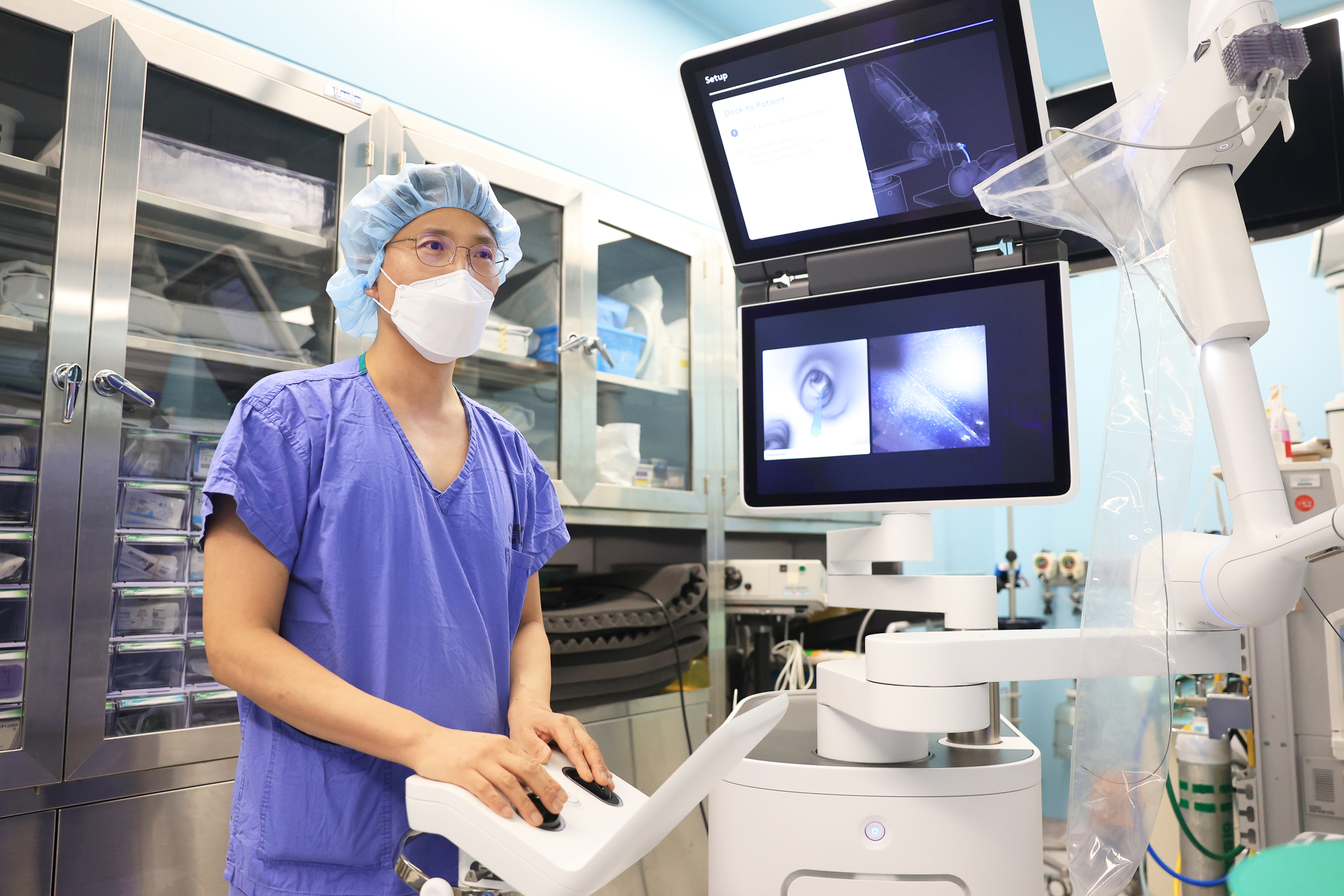
Samsung Medical Center announced on May 14 that it has introduced a robotic bronchoscopy system.
The newly adopted platform is the Ion Endoluminal System, a shape-sensing robotic-assisted bronchoscopy platform developed by Intuitive Surgical.
Similar to the da Vinci surgical robot system, the platform enables physicians to perform bronchoscopic procedures by controlling robotic arms remotely. In Korea, the technology was officially recognized as a new medical technology in 2023.
Robotic bronchoscopy is considered one of the most accurate diagnostic modalities among various procedures used for suspected lung cancer and peripheral pulmonary lesions, including CT-guided fine-needle aspiration biopsy, endobronchial ultrasound (EBUS), and electromagnetic navigation bronchoscopy (ENB).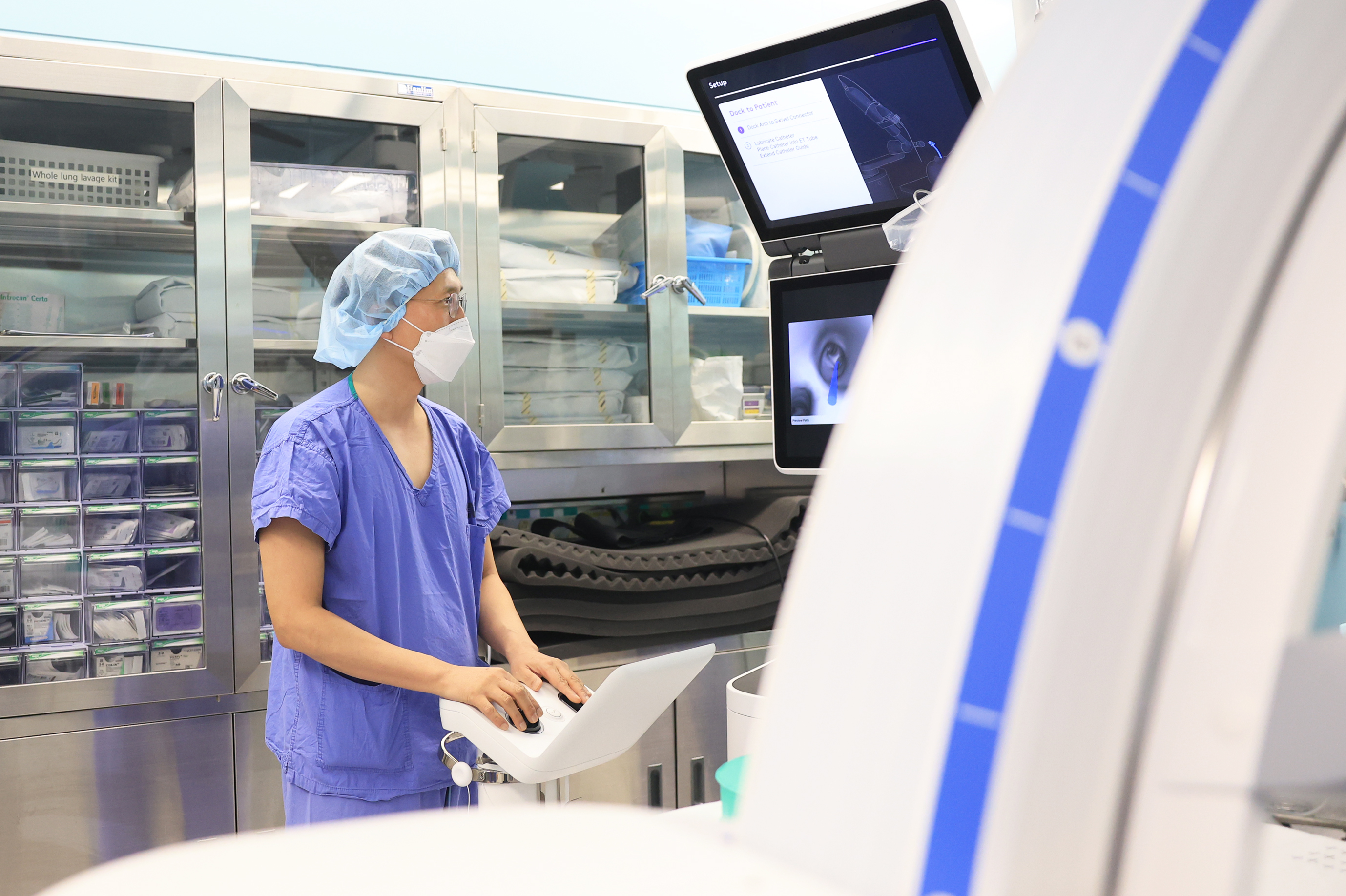
In particular, the system’s catheter-mounted fiber-optic shape-sensing technology displays not only real-time endoscopic images, but also the precise shape and location of the catheter on the monitor, enabling highly accurate navigation and examination.
The technology allows physicians to visualize the complex bronchial pathways of the lungs much like a navigation map while providing precise maneuverability. This makes it possible to access and biopsy very small nodules located in the peripheral regions outside the bronchial tree, which have traditionally been difficult to reach using conventional techniques.
Professor Kyung Jong Lee, Chair of the Division of Pulmonary and Critical Care Medicine at Samsung Medical Center, said, “With the introduction of robotic bronchoscopy, we are now able to provide highly precise diagnostic examinations for patients suspected of having lung cancer. We expect this technology to help reduce patient anxiety while improving prognosis by enabling earlier detection and timely treatment.”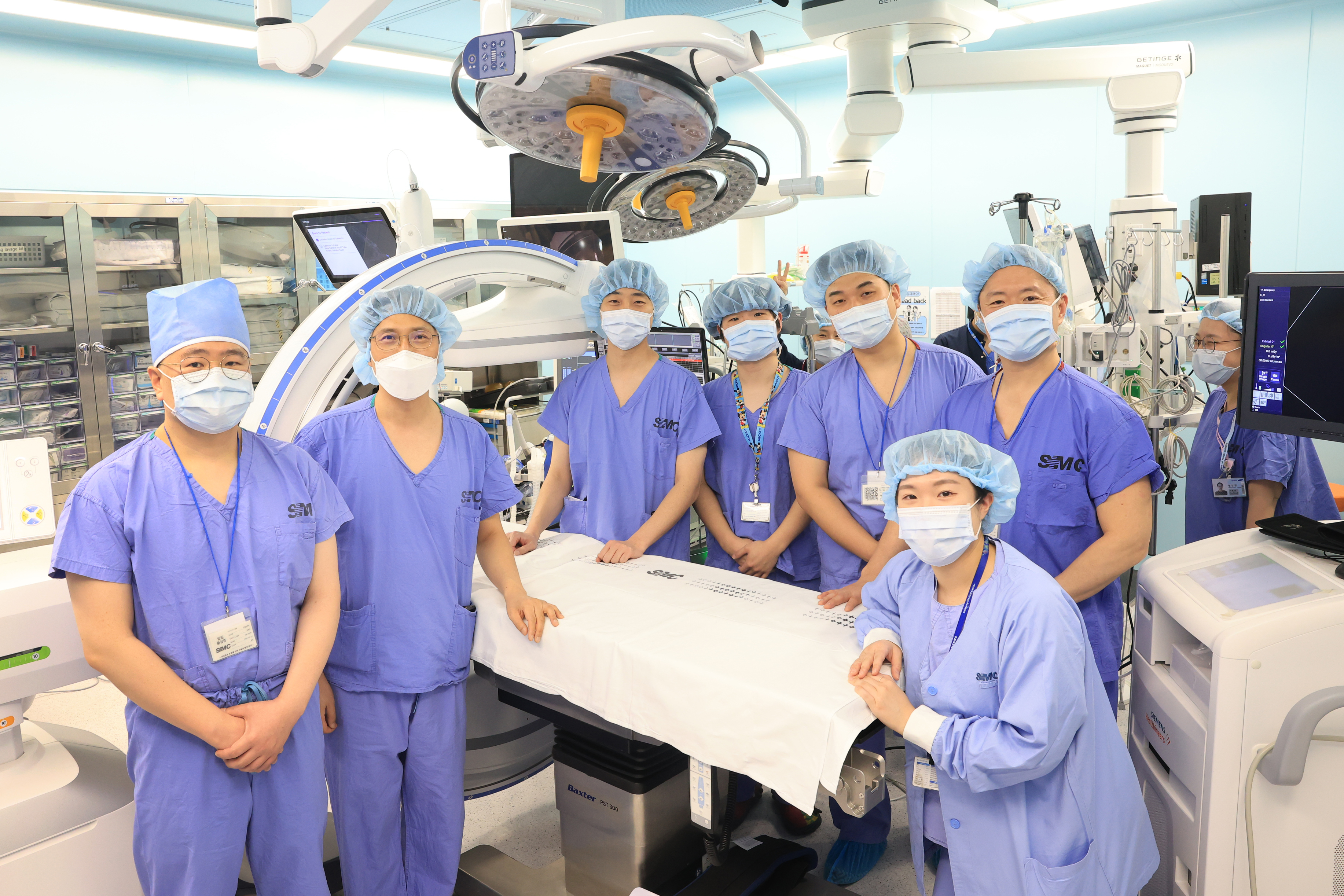
Meanwhile, the Division of Pulmonary and Critical Care Medicine at Samsung Medical Center was ranked 19th globally in the “World’s Best Specialized Hospitals 2026” rankings published by Newsweek, rising four places from the previous year. The hospital also maintained its position as the No. 1 respiratory specialty hospital in Korea for the third consecutive year.
Samsung Medical Center has demonstrated excellence across a broad spectrum of respiratory diseases, including lung cancer, chronic obstructive pulmonary disease (COPD), nontuberculous mycobacterial pulmonary disease, interstitial lung disease, and post-lung transplant care.
The Division of Pulmonary and Critical Care Medicine performs more than 1,600 endobronchial ultrasound procedures annually for lung cancer diagnosis and is approaching a cumulative milestone of 20,000 cases.
Since 2017, the department has also conducted approximately 600 radial probe endobronchial ultrasound-guided lung biopsies each year for peripheral pulmonary nodules.
In addition, the department performs more than 200 rigid bronchoscopy procedures annually, including airway stenting for bronchial stenosis and endobronchial tumor removal, while working closely with the multidisciplinary Lung Cancer Center team in the field of interventional pulmonology.
With the introduction of robotic bronchoscopy, Samsung Medical Center is expected to further strengthen its leadership in both diagnostic and therapeutic bronchoscopy in Korea.