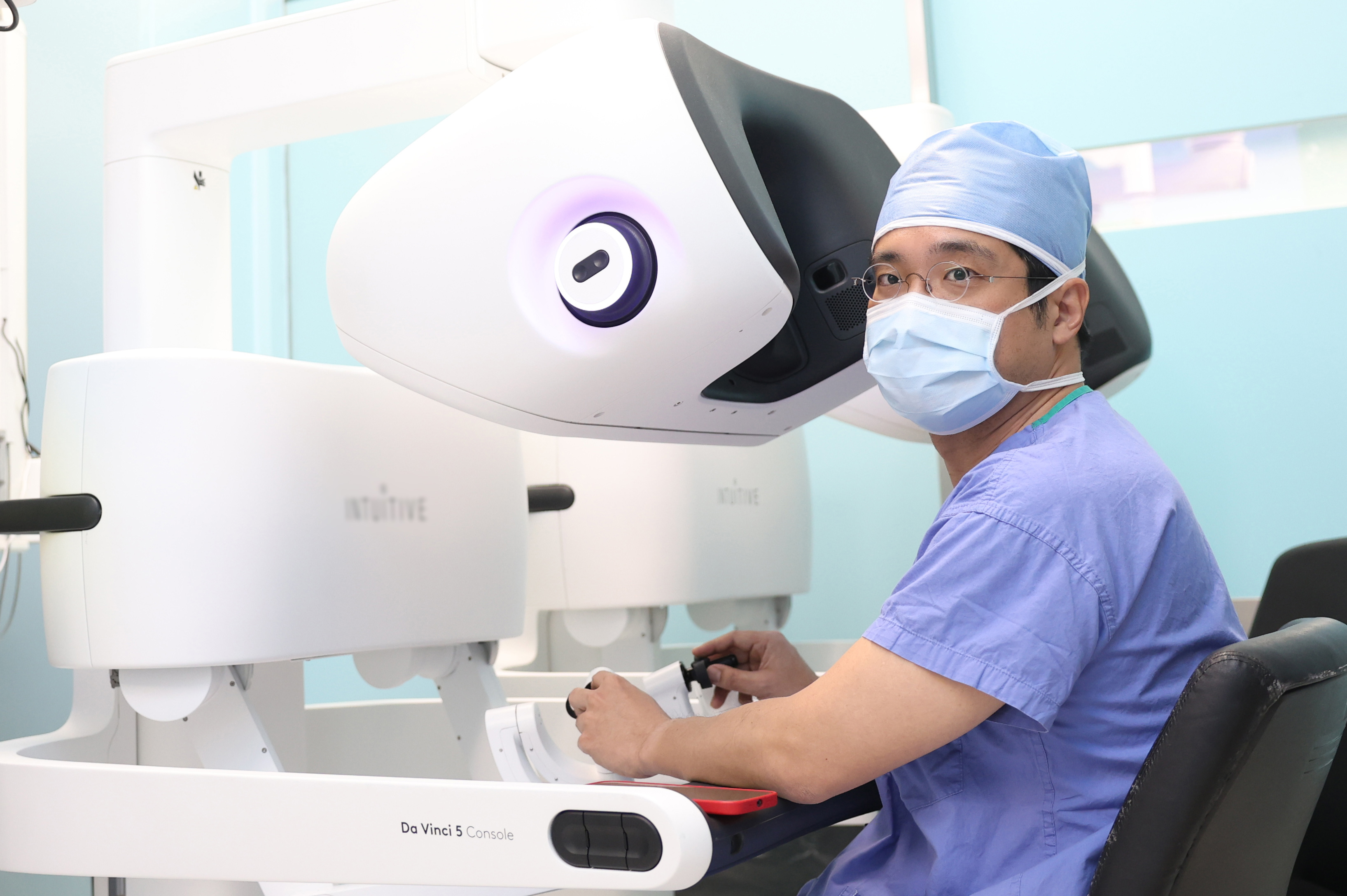
An important milestone has been established for the adoption of single-port robotic surgery using the da Vinci system in esophageal cancer. Samsung Medical Center announced that a research team led by Professor Seong Yong Park of the Department of Thoracic and Esophageal Surgery published the outcomes of single-port robotic surgery for esophageal cancer in a recent issue of Esophagus, the official journal of the Japan Esophageal Society.
The study compared surgical outcomes between conventional multiport and single-port robotic surgeries for esophageal cancer performed at Samsung Medical Center between December 2024 and November 2025. This marks the first time that outcomes of single-port robotic esophageal cancer surgery performed via a transthoracic, intercostal approach have been officially reported to the academic community.
Single-port robotic surgery is a technique in which all surgical instruments and the camera are introduced through a single small incision in the abdomen or chest. While single-port surgery has increasingly been adopted across various cancer types in recent years to reduce the burden on patients, it has been widely considered difficult to generalize to esophageal cancer given the anatomical complexity of the esophagus, which spans the neck, chest, and abdomen.
In particular, dissection of the upper mediastinal lymph nodes—a site of frequent metastasis in esophageal squamous cell carcinoma—posed physical limitations for other single-port approaches, prompting the research team to devise a surgical technique using a transthoracic approach through the intercostal space.
According to the study, of the robotic esophageal cancer surgeries performed at Samsung Medical Center during the study period, 104 cases were performed using the multiport approach and 21 cases using the single-port approach. Although the majority of esophageal cancer surgeries were multiport procedures, the outcomes between the two approaches showed no notable differences.
The research team reported in the paper that there were no differences between the two surgical methods in operative time, number of lymph nodes resected, length of hospital stay, in-hospital pain, or postoperative complications. Notably, the R0 resection rate—a critical measure of complete tumor removal—was also comparable between the two approaches. On the other hand, the team reported that intraoperative bleeding, a potential complication of esophageal cancer surgery, was in fact lower with the single-port approach.
Professor Seong Yong Park stated, "Now that the safety and feasibility of single-port surgery for esophageal cancer have been established, this is expected to bring significant changes to surgical practice going forward. As we anticipate improved patient outcomes, including reduced pain and enhanced quality of life, we will continue to focus on further advancing this surgical technique."
Meanwhile, the Department of Thoracic and Esophageal Surgery at Samsung Medical Center holds the largest volume of esophageal cancer surgeries performed in Korea, and has likewise been at the forefront of advanced surgical techniques such as robotic surgery. In 2023, the department became the first in Asia to introduce robotic surgical equipment dedicated to thoracic and esophageal surgery, and in 2025 it was designated as Korea's first robotic surgery EpYicenter. The EpYicenter designation is conferred by Intuitive Surgical, the manufacturer of the da Vinci robotic surgical system, on institutions selected for their ability to reliably provide surgical training to other hospitals and medical staff.
Of the 245 esophageal cancer surgeries performed at Samsung Medical Center in 2025, robotic surgery accounted for 79% of cases. Patients who underwent surgery at the hospital that year achieved outstanding outcomes, with a 0% mortality rate both within 30 days postoperatively and during hospitalization.
Treatment outcomes have also improved. The five-year relative survival rate for esophageal cancer patients treated at Samsung Medical Center stands at 62.5%, significantly exceeding both the national average in Korea (43.5%) and the average in the United States (21.9%). Currently, under the leadership of Department Chair Hong Kwan Kim, the team is conducting a project titled "Establishing a Cohort for Identifying Unmet Needs and Preparing Clinical Trials to Enhance Quality of Life in Esophageal Cancer Survivors," set to run through the end of 2027, with a focus on improving quality of life for long-term esophageal cancer survivors.
Professor Hong Kwan Kim remarked, "We aim to present a new paradigm in the field of esophageal cancer to pursue more accurate diagnosis and more optimized treatment. We will continue to move forward without ceasing our efforts to meet future challenges."
Single-Port Robotic Surgery Blossoms in Esophageal Cancer
Meet SMC Doctors
Seong Yong Park
Associate Professor of Thoracic Surgery, Samsung Medical Center, Sungkyunkwan University
Robotic Surgery for Esophageal Cancer, Lung Cancer, Esophageal Cancer, Thymic Carcinoma, Thymoma and Mediastinal Tumors
Hong Kwan Kim
Professor of Thoracic Surgery, Samsung Medical Center, Sungkyunkwan University
Lung Cancer, Esophageal Cancer, Esophageal Reconstruction, Minimal Invasive Surgery (Robotic Surgery, Thoracoscopic Surgery)