A new approach may enable clinicians to estimate right atrial pressure in patients with severe tricuspid regurgitation without inserting a catheter into the heart.
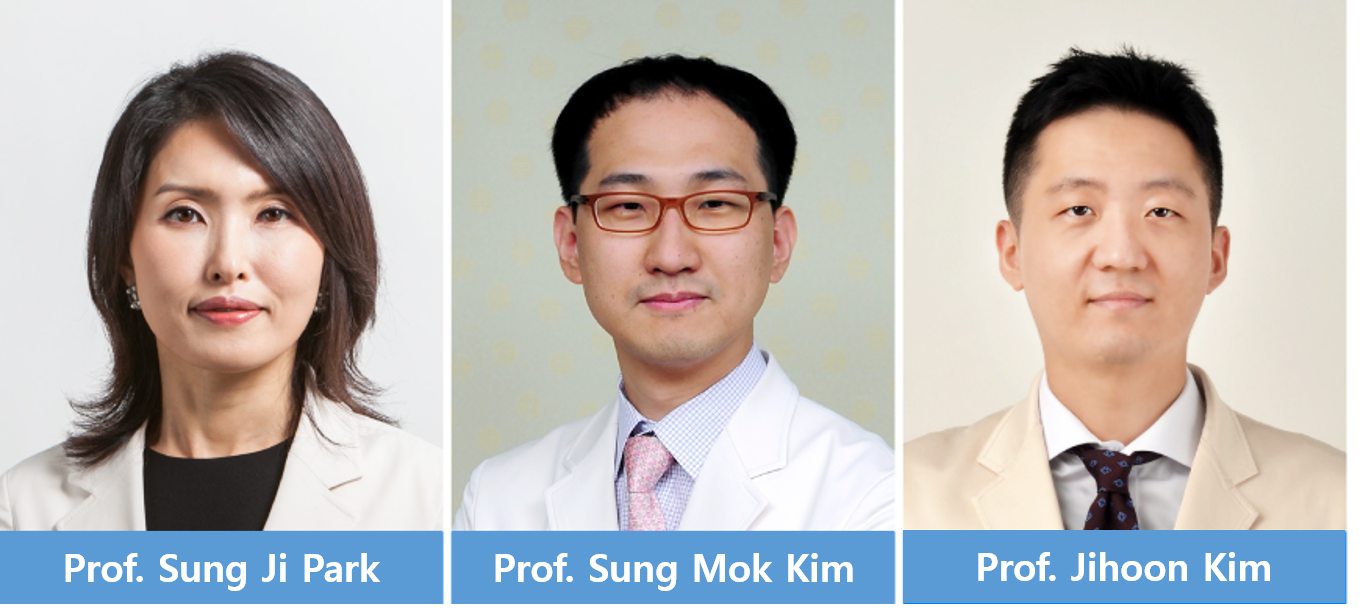
A research team led by Professors Sung Ji Park and Jihoon Kim from the Division of Cardiology, Professor Sung Mok Kim from the Department of Radiology at HVSI(Heart Vascular Stroke Institute) Imaging Center, Samsung Medical Center, and a research team led by Professor Ji Hee Son from the Division of Cardiology at Chung-Ang University Gwangmyeong Hospital demonstrated that cardiac MRI can be used to estimate right atrial pressure in patients with severe tricuspid regurgitation.
The team analyzed 47 patients with severe tricuspid regurgitation who underwent both cardiac catheterization and cardiac MRI at Samsung Medical Center between September 2021 and January 2026. The findings were recently published in the Journal of Cardiovascular Magnetic Resonance (IF=6.1).
The tricuspid valve, located between the right atrium and right ventricle, regulates blood flow through the heart. When the valve fails to close properly, blood pumped into the right ventricle leaks backward into the right atrium, causing right atrial pressure to rise.
Elevated right atrial pressure can lead to severe fatigue and leg swelling, and in advanced cases may progress to heart failure.
Right atrial pressure is a key indicator used to determine the severity of tricuspid regurgitation. However, accurate measurement has traditionally required invasive cardiac catheterization, which carries risks of discomfort and procedure-related complications.
Echocardiography also has limitations in patients with severe disease, as substantial regurgitant flow can make pressure estimation less reliable.
To address these challenges, the research team turned to cardiac MRI for its capacity to characterize cardiac structure and function with high precision.
The study found that larger right ventricular end-diastolic volume index values were associated with higher right atrial pressure. As regurgitant volume increases, the right ventricle enlarges to accommodate the excess blood volume, and the elevated right ventricular pressure is subsequently transmitted to the right atrium.
The researchers also observed that lower right atrial longitudinal strain, an indicator of right atrial wall compliance, correlated with higher actual right atrial pressure. When the right atrium cannot adequately expand, pressure rises more easily as blood enters the chamber.
Notably, the diagnostic accuracy for identifying high-risk patients requiring urgent treatment—defined as a mean right atrial pressure greater than 10 mmHg—showed an area under the curve (AUC) of 0.78 for right ventricular volume index and 0.82 for right atrial strain parameters.
Professor Sung Ji Park, Director of the HVSI Imaging Center, said, “This study expands the clinical value of cardiac MRI by addressing a diagnostic blind spot in severe tricuspid regurgitation that has been difficult to evaluate using echocardiography alone, while also overcoming the limitations of invasive cardiac catheterization. Our findings demonstrate that cardiac MRI can provide not only structural information, but also right atrial pressure estimates and broader hemodynamic insights. We expect this to serve as an important foundation for precision evaluation and optimal treatment planning in patients with valvular heart disease.”
Meanwhile, Samsung Medical Center Heart Vascular Stroke Institute Imaging Center has been conducting multidisciplinary research through close collaboration between cardiology and radiology specialists, utilizing echocardiography, cardiac CT, and cardiac MRI to improve diagnostic evaluation and treatment strategies for patients with cardiovascular disease.
Cardiac MRI Helps Determine Severity of Tricuspid Regurgitation
Meet SMC Doctors
Sung Ji Park
Professor, Department of Medicine, Division of Cardiology, Heart Vascular and Stroke Institute, Samsung Medical Center, Sungkyunkwan University School of Medicine
Heart Valve Disease, Valve Intervention (TAVI, MitraClip), Echocardiography, Heart Failure, High-Risk Pregnant Women with Cardiovascular Disease, Women's Cardiovascular Diseases
Sung Mok Kim
Professor of Department of Radiology, Samsung Medical Center, Sungkyunkwan University School of Medicine
Cardiovascular Imaging Radiology
Jihoon Kim
Associate Professor, Department of Medicine, Division of Cardiology, Heart Vascular and Stroke Institute, Samsung Medical Center, Sungkyunkwan University School of Medicine
Heart Valve Disease, Echocardiography, Heart Failure, Myocardial Disease