If you have REM sleep behavior disorder, it may be worth paying attention not only to your sleep symptoms but also to your body's water balance—because the proportion of water in your body can act as a mirror reflecting brain health. A recent study has found that a water-ratio measure obtainable through body composition analysis (InBody) can help predict the risk of neurodegenerative diseases such as Parkinson's disease.
A research team led by Professor Eun Yeon Joo of the Department of Neurology at Samsung Medical Center and Professor Hee Won Bae of the Department of Neurology at Ilsan Paik Hospital analyzed the association between body composition measures and the risk of developing neurodegenerative diseases in patients with REM sleep behavior disorder. Their findings were published in a recent issue of the international journal Sleep Medicine (IF=3.4).
REM sleep behavior disorder is a condition in which patients physically act out their dreams during sleep, including shouting, talking, or making vigorous limb movements. More than 80% of patients are known to develop neurodegenerative diseases such as Parkinson's disease or dementia with Lewy bodies within 10 to 15 years. However, the predictive markers currently in use often require costly equipment or specialized testing, limiting their repeated use in routine clinical practice.
To address this, the research team used InBody, a bioelectrical impedance analysis device, to analyze 147 patients diagnosed with REM sleep behavior disorder between 2016 and 2024. Over an average follow-up period of approximately 4.5 years, 21.1% of all patients developed a neurodegenerative disease.
The analysis revealed that patients with a higher extracellular water ratio were at greater risk of developing neurodegenerative diseases. The extracellular water ratio—the proportion of total body water located outside the cells—reflects the body's ability to regulate fluid and its chronic inflammatory state. An elevated value outside the normal range indicates impaired cell membrane function or abnormal fluid accumulation due to inflammation. The researchers proposed that such physiological imbalance and an inflammatory environment may render the nervous system more vulnerable, ultimately acting as risk factors that promote the degeneration of nerve cells.
In fact, for each increase of one standard deviation in the extracellular water ratio, the risk of developing a neurodegenerative disease rose 6.56-fold. In the high-risk group, in which this value exceeded 38.4%, disease progression tended to be faster.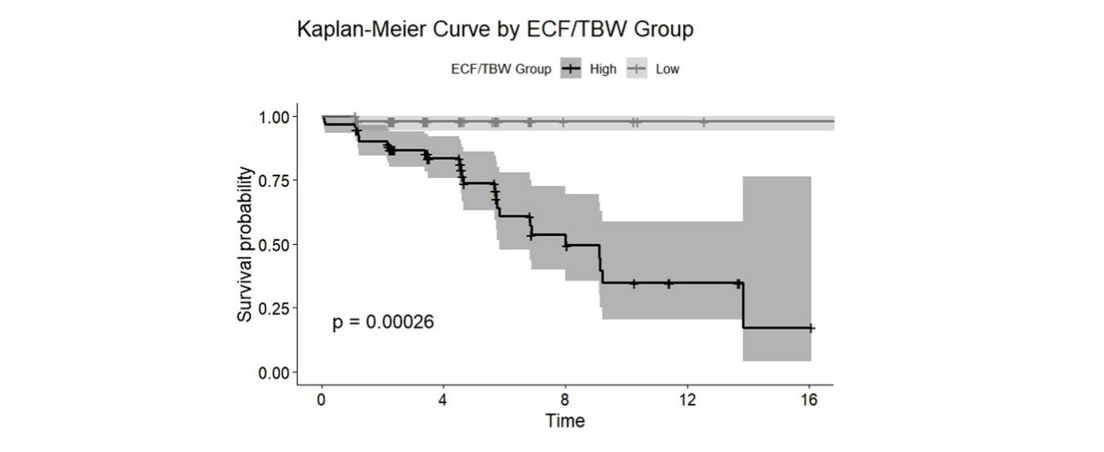
The phase angle, which reflects cellular health, was associated with the degree of muscle rigidity and tremor experienced by patients. The researchers explained that a lower phase angle indicates reduced cellular function and weakened muscle tissue, which may make the related movement disorders more pronounced. According to the team's interpretation, the extracellular water ratio can be used to predict the risk of disease onset, while the phase angle can be used to gauge symptom severity.
"REM sleep behavior disorder carries a high risk of progressing to Parkinson's disease or dementia, yet there have been limitations in conveniently identifying high-risk patients in routine clinical practice," said Professor Eun Yeon Joo. "The significance of this study lies in demonstrating the potential for a widely accessible body composition test to be used in monitoring a patient's risk of disease onset."