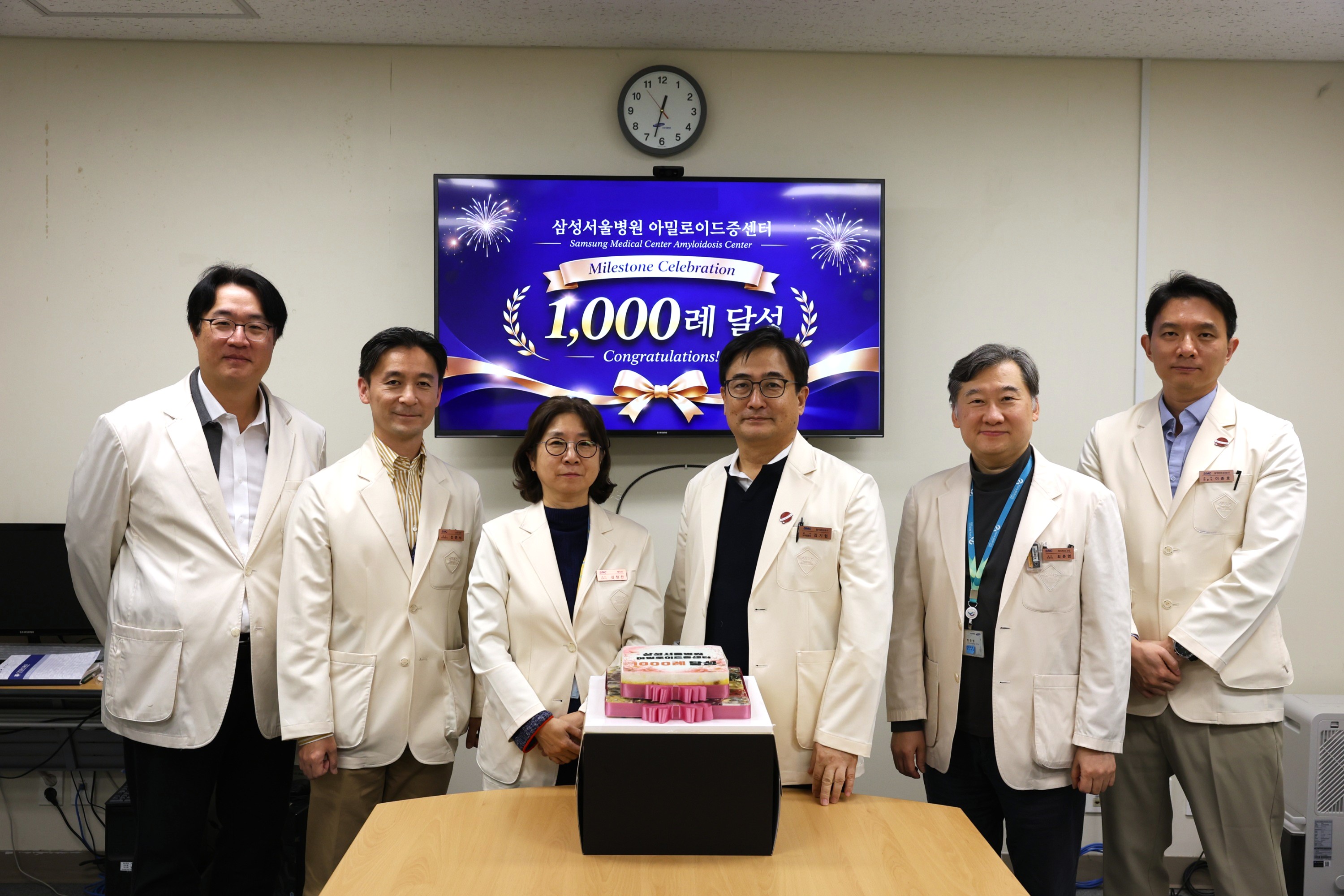
From left: Professor Jin Oh Choi (Cardiology), Professor Jun-Seok Jeon (Nephrology), Professor Jung Sun Kim (Pathology), Professor Ki Hyun Kim (Hematology-Oncology), Professor Joon Young Choi (Nuclear Medicine), and Professor Jun Ho Yi (Hematology-Oncology).
“The Result of Dedicated Multidisciplinary Collaboration”
Samsung Medical Center announced on November 19 that 1,000 patients have been enrolled in its amyloidosis registry.
Amyloidosis is one of the most representative rare diseases, characterized by the deposition of abnormal protein fibrils, known as amyloid, in organs throughout the body. In Korea, the disease is reported to occur at a rate of about 7.2 cases per million people per year. Amyloidosis is broadly classified by cause into four types: primary, secondary, hereditary, and senile.
In 2012, Samsung Medical Center formed an Amyloidosis Multidisciplinary Care Team to address this rare disease. In 2019, it opened the Amyloidosis Center and has since focused on clinical care and research in earnest.
Ki Hyun Kim, Director of the Amyloidosis Center and Professor of Hematology-Oncology, said, “Because amyloidosis is a systemic disease that affects multiple organs, close coordination through a multidisciplinary research network is essential. Through clinical network programs, we will standardize and refine diagnostic and treatment protocols and do our best to benefit patient care.”