Corneal transplantation, also known as keratoplasty, is a surgical procedure in which diseased or scarred corneal tissue is replaced with healthy donor corneal tissue.
The cornea is the transparent front surface of the eye that allows light to enter and helps focus images onto the retina. When the cornea becomes cloudy, scarred, swollen, or structurally irregular, vision may become blurred or distorted.
Corneal transplantation may be performed to:
- Restore vision
- Maintain structural integrity of the eye
- Treat corneal diseases unresponsive to medical therapy
- Improve appearance in selected cases
Common conditions that may require corneal transplantation include:
- Keratoconus
- Corneal scarring due to trauma or infection
- Bullous keratopathy
- Severe corneal edema
- Advanced corneal dystrophies
- Selected inflammatory corneal diseases
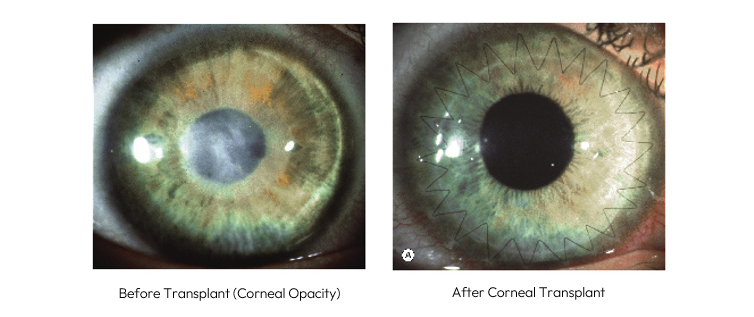
Corneal transplantation is only appropriate when pathology is confined primarily to the cornea. Diseases involving the retina or optic nerve are not corrected by corneal transplant surgery.
Preparation Guidelines of Corneal Transplantation
Preoperative Evaluation
Before surgery, a comprehensive ophthalmic examination is performed, including:
- Slit-lamp evaluation
- Corneal topography
- Pachymetry (corneal thickness measurement)
- Specular microscopy (endothelial cell assessment)
- Retinal examination
The surgeon determines the appropriate type of transplant based on the depth and extent of corneal involvement.
Types of Corneal Transplantation
Depending on the layer involved, different surgical techniques may be used:
- Penetrating Keratoplasty (PK): Full-thickness corneal transplant
- Deep Anterior Lamellar Keratoplasty (DALK): Replacement of the anterior corneal layers while preserving the patient’s own endothelium
- Endothelial Keratoplasty (e.g., DSEK, DMEK): Replacement of the diseased endothelial layer only
Lamellar techniques often allow for faster recovery and lower rejection risk compared to full-thickness transplantation, though surgical complexity may be higher.
Contraindications
Donor-related contraindications include certain transmissible infections and prion diseases.
Recipient-related contraindications may include:
- Severe uncontrolled dry eye
- Neurotrophic keratitis
- Severe exposure keratopathy
- Active ocular infection
- Significant retinal or optic nerve disease limiting visual potential
What to Expect
During Surgery
Corneal transplantation is typically performed under local or general anesthesia and usually takes one to two hours, depending on the technique used.
In penetrating keratoplasty:
- A circular section of the diseased cornea is removed.
- A matching donor corneal graft is sutured into place using fine stitches.
In lamellar procedures:
- Only the affected corneal layer is replaced.
- Smaller incisions may be used.
- Sutures may be fewer or, in some cases, not required.
Immediately After Surgery
After surgery:
- A protective shield is placed over the eye.
- Blurred vision is expected initially.
- Mild discomfort, light sensitivity, or tearing may occur.
- Patients are prescribed antibiotic and corticosteroid eye drops.
Most patients return home the same day unless additional medical monitoring is required.
Early Recovery
Vision improvement is gradual and may take several months. Sutures (if present) may remain for several months to a year, depending on healing and visual outcome. Regular follow-up appointments are essential to monitor healing and detect early signs of rejection.
Risks and Complications of Corneal Transplantation
Although corneal transplantation has a high success rate, complications may occur.
Early Complications
- Infection
- Elevated intraocular pressure
- Wound leakage
- Persistent epithelial defects
Late Complications
- Graft rejection
- Graft failure
- Astigmatism due to suture tension
- Recurrence of underlying disease
- Need for repeat transplantation
Signs of corneal graft rejection may include:
- Redness
- Sensitivity to light
- Decreased vision
- Pain
Prompt evaluation is critical if these symptoms occur.
Results and Follow-Up of Corneal Transplantation
Corneal transplantation can significantly improve visual clarity when successful.
Postoperative Care
Patients must:
- Use prescribed eye drops exactly as directed.
- Avoid rubbing the eye.
- Wear protective eyewear as instructed.
- Avoid heavy lifting and strenuous activity during early healing.
- Protect the eye from trauma.
Long-Term Monitoring
Follow-up visits are required to:
- Monitor graft clarity
- Adjust sutures if necessary
- Assess visual recovery
- Detect early rejection
Although many grafts function well for years, some patients may require repeat transplantation if graft function declines over time.
Lifestyle Considerations
- Driving should only resume when vision is considered safe.
- Contact lens use may be possible after healing, depending on corneal shape.
- Sun protection is advisable but not as critical as in systemic organ transplantation.