
A new artificial intelligence (AI)-based approach may help identify Parkinson’s disease patients at high risk of falls before accidents occur.
A research team led by Professor Jinyoung Youn of the Department of Neurology and Dr. Hakje Yoo of the AI Research Center at Samsung Medical Center has developed an AI model capable of accurately distinguishing Parkinson’s disease patients at elevated risk of falls by analyzing gait parameters alongside a wide range of clinical data.
The study was recently published in npj Parkinson’s Disease (Impact Factor: 8.2), an international peer-reviewed journal in the Nature Portfolio.
Parkinson’s disease is a progressive neurodegenerative disorder characterized by the gradual loss of brain cells responsible for controlling movement. As the disease advances, gait impairment and balance dysfunction worsen, and approximately 60% of patients experience falls.
Because even a single fall can result in fractures, hospitalization, and reduced mobility, early identification of high-risk patients is critical. However, objectively assessing fall risk has remained challenging due to the considerable variability in both motor and non-motor symptoms among individuals with Parkinson’s disease.
To address this challenge, Professor Jinyoung Youn’s team leveraged AI technology.
The researchers analyzed data from 396 participants with complete datasets out of a total cohort of 468 individuals. Among them, data from 298 patients treated at Samsung Medical Center were used to train the AI model, while data from 98 patients at Korea University Ansan Hospital served as an external validation cohort. Participants were categorized into three groups based on fall history: Parkinson’s disease patients with a history of falls, Parkinson’s disease patients without falls, and healthy controls.
The analysis incorporated both clinical assessment data and gait parameters—including walking speed, stride length, and gait patterns—measured using the electronic gait analysis system GAITRite. The researchers selected key variables using two different feature-selection approaches, statistical feature selection and importance-based feature selection, and subsequently compared the performance of seven machine-learning algorithms.
Among the seven models evaluated, an Extra Trees classifier utilizing statistically selected features demonstrated the best performance. The model achieved an accuracy of 88% in internal validation and 89% in external validation, confirming its robust reproducibility in an independent patient cohort from another institution.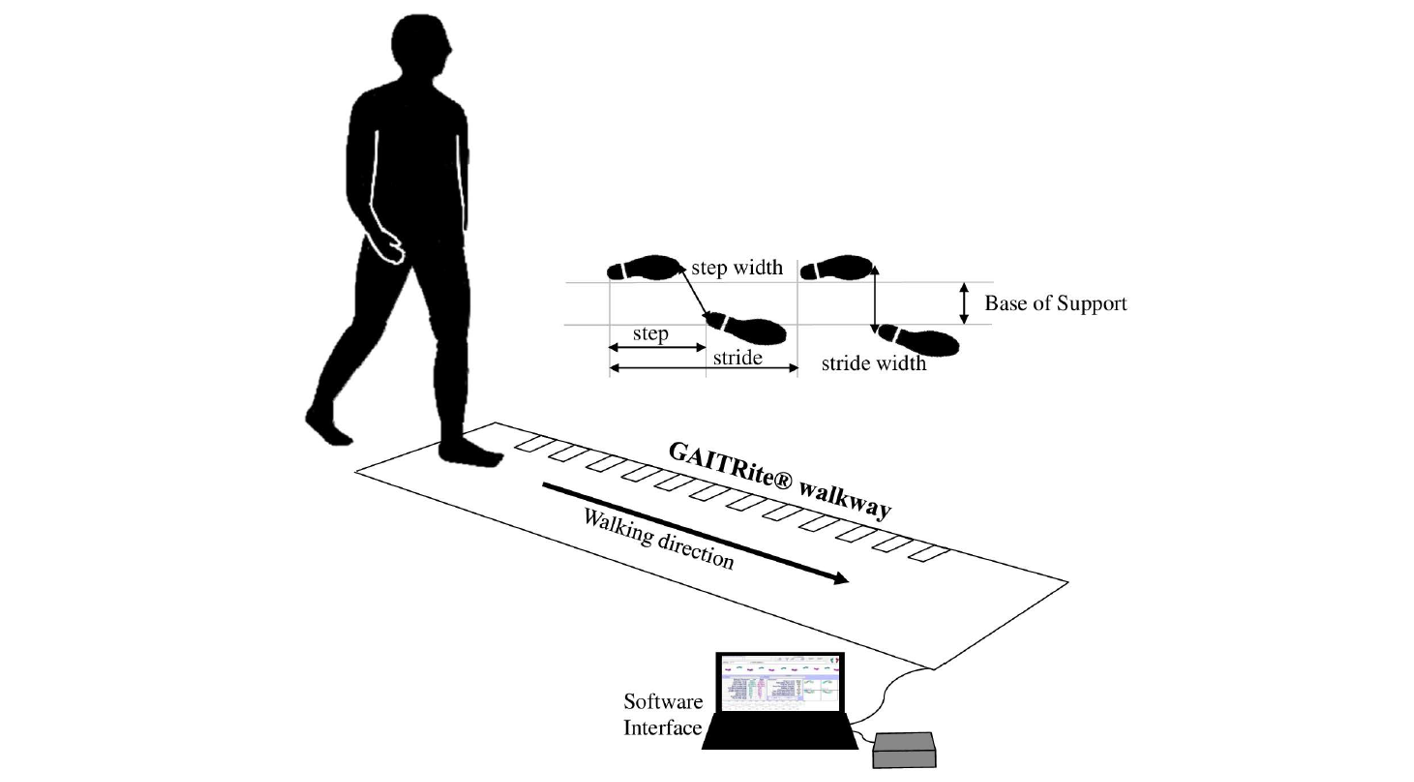
The researchers also identified the factors that contributed most significantly to the model’s fall-risk predictions. These included fear of falling, balance-related measures such as gait speed and stride length, and autonomic dysfunction.
According to the research team, these findings suggest that falls in Parkinson’s disease are not driven solely by motor symptoms but rather reflect a complex interplay of both motor and non-motor manifestations of the disease.
“This study is significant because it establishes a foundation for future AI-driven prospective fall prediction research and for the development of more sophisticated assessment models incorporating wearable sensor data and imaging information,” said Dr. Hakje Yoo.
Professor Jinyoung Youn added, “Our findings demonstrate that AI can integrate diverse clinical information and gait data to identify high-risk patients more objectively. The model showed comparable accuracy in external validation, supporting its potential for broader clinical applicability.”